Category Archives: Teaching Art to Children

Successful art teaching strategies and ways to build a supportive environment conducive to art making.

Happy New {School} Year!

September marks the beginning of a new year for teachers, children and parents. It may be a tough transition for some, but for others it is an exciting time. I always did enjoy the Staples commercial that synced “It’s the most wonderful time of the year” with an overjoyed father taking his children shopping for supplies. Watch it on You Tube below. Classic.

For teachers, September means promise. It opens us up to an array of opportunities to make this year the most successful year yet. This year we will try out new classroom management tactics. We will re-design our studio space to make it exciting, user friendly and a comfortable work environment. Oh, and we will start report card narrative writing two whole months before they are due. Let’s make those last three statements into “I” statements because that is what I plan to do. What are you excited about this year? And if you are not excited, you can share those thoughts too…

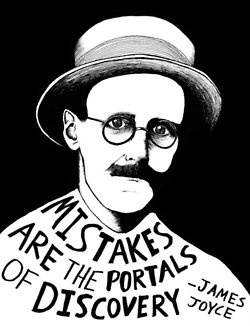
Above is an image I found on Grey Matter. I plan on including it in my selection of inspirational phrases that hang in my art studio. I have shared a few of my favorites with you below:

Celebrate Differences

Feed Your Curiosity

Practice Making Creative Choices

Always Play First  (shared by a fellow art teacher I met in grad school)

Practice Makes Better  (a friend of mine heard this from their child’s teacher)

Take on a Creative Challenge Today!

Trust your Hands  (shared by a fellow art teacher)

Creativity Takes Courage  Henri Matisse

See. Think. Wonder.  (Visible Thinking, Project Zero)

Today is a New Beginning

Feel free to use these in your classroom or studio to encourage awareness, openness and risk taking.

Have you tried anything new that has lead the year to a successful start? What are you most proud of in your space?

Happy New Beginnings! -MJ
Leave a comment

Filed under Inspiration, Teaching Art to Children

Organizing with COLOR

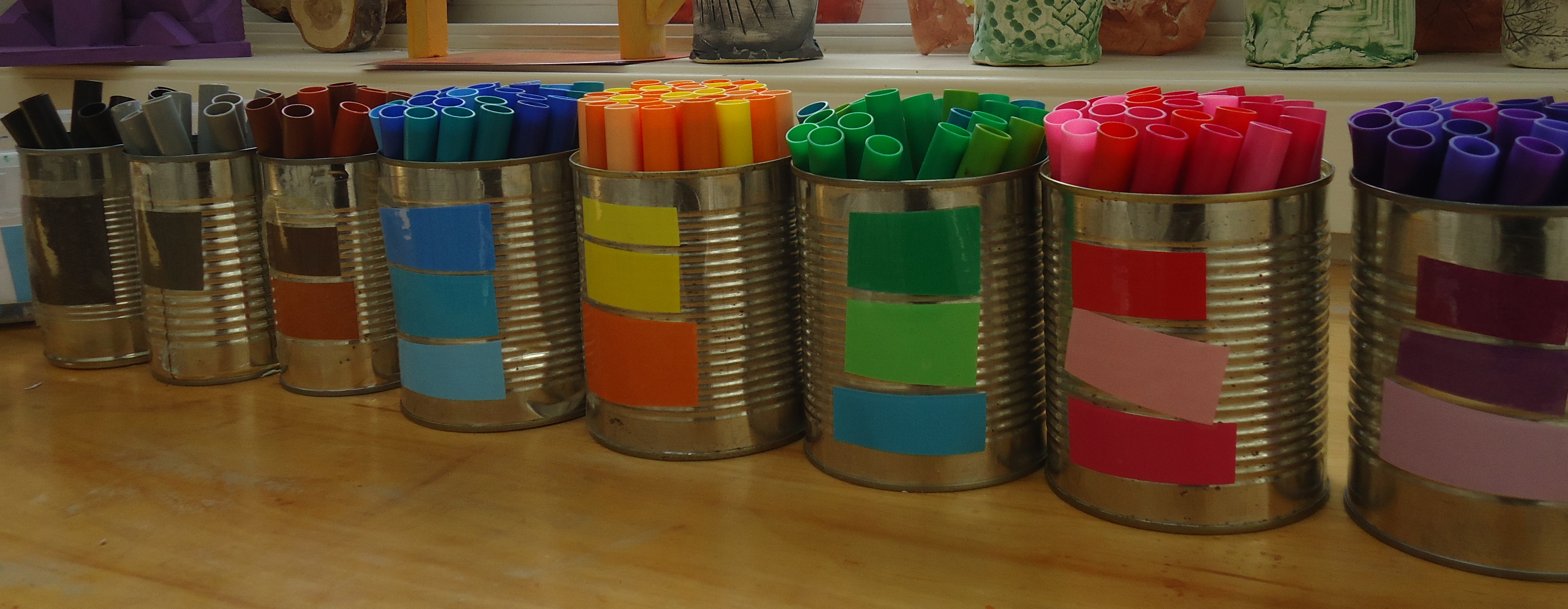
markers organized by hue and temperature

The local thrift store in my neighborhood organizes their articles of clothing by type and by COLOR. This method of categorization is what excites my senses and motivates me to search, touch and discover great finds. But this is not the first time I have seen this done, for it is an imperative attribute of the display of materials at the infant and toddler schools in Reggio Emilia, Italy. I had the opportunity to experience being in their classrooms and have learned that the Reggio approach believes that the learning environment is the third teacher and the organization of materials plays a crucial part in engaging students in art making. To learn more about the Reggio approach to teaching, click here.

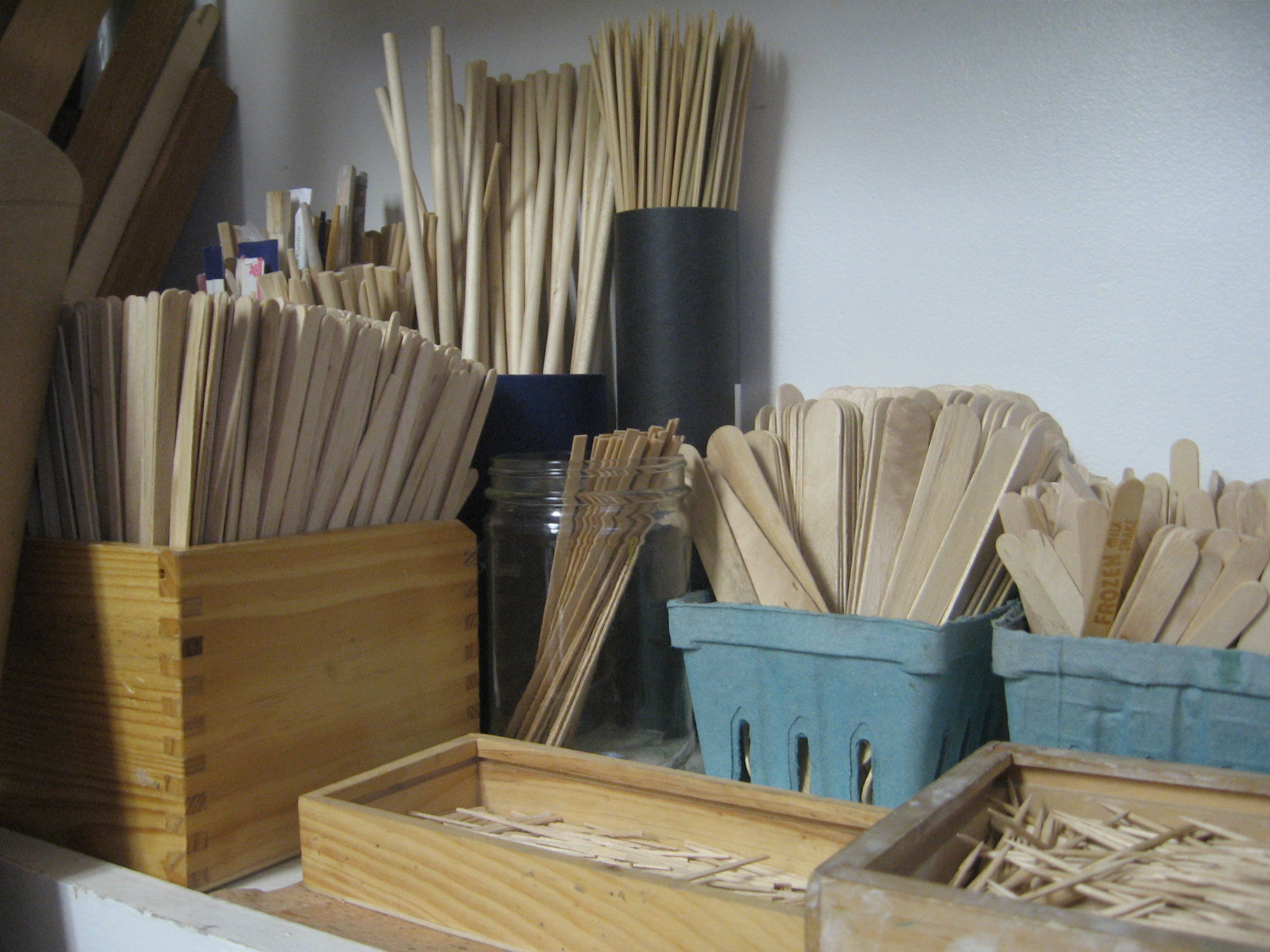
beautifully organized wooden materials at Beginnings Nursery

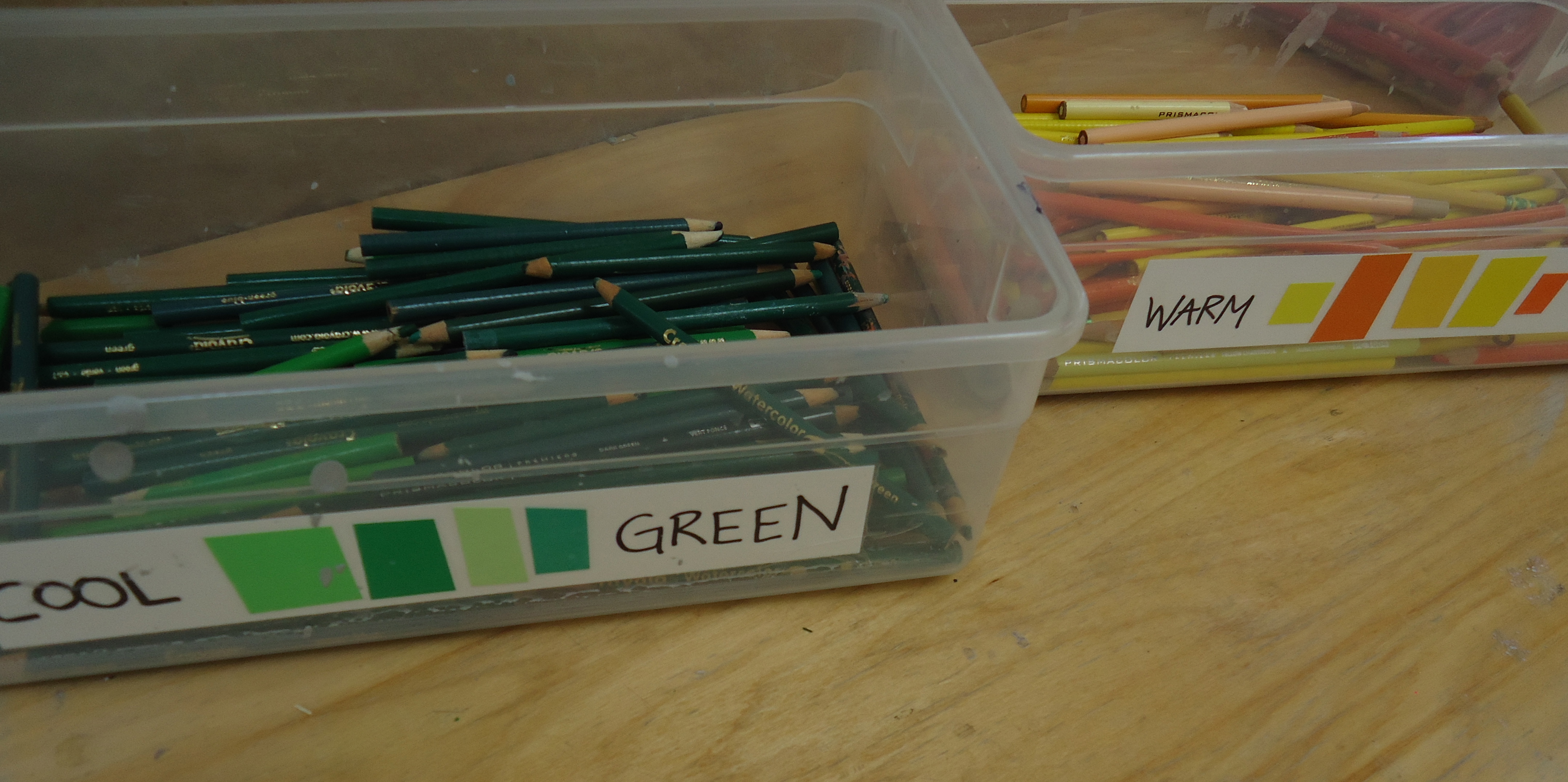
To promote self-service, the materials in my art studio are always available to students and on display on the counter tops. Markers, colored pencils, oil pastels and water color pencils are organized by hue and temperature. Students use trays to collect their color choices as well as scissors and glue at their leisure when they need them. We take the time to discuss how materials can be used mindfully and respectfully and how we can practice responsibility during clean up by placing every tool back in their “home base”.

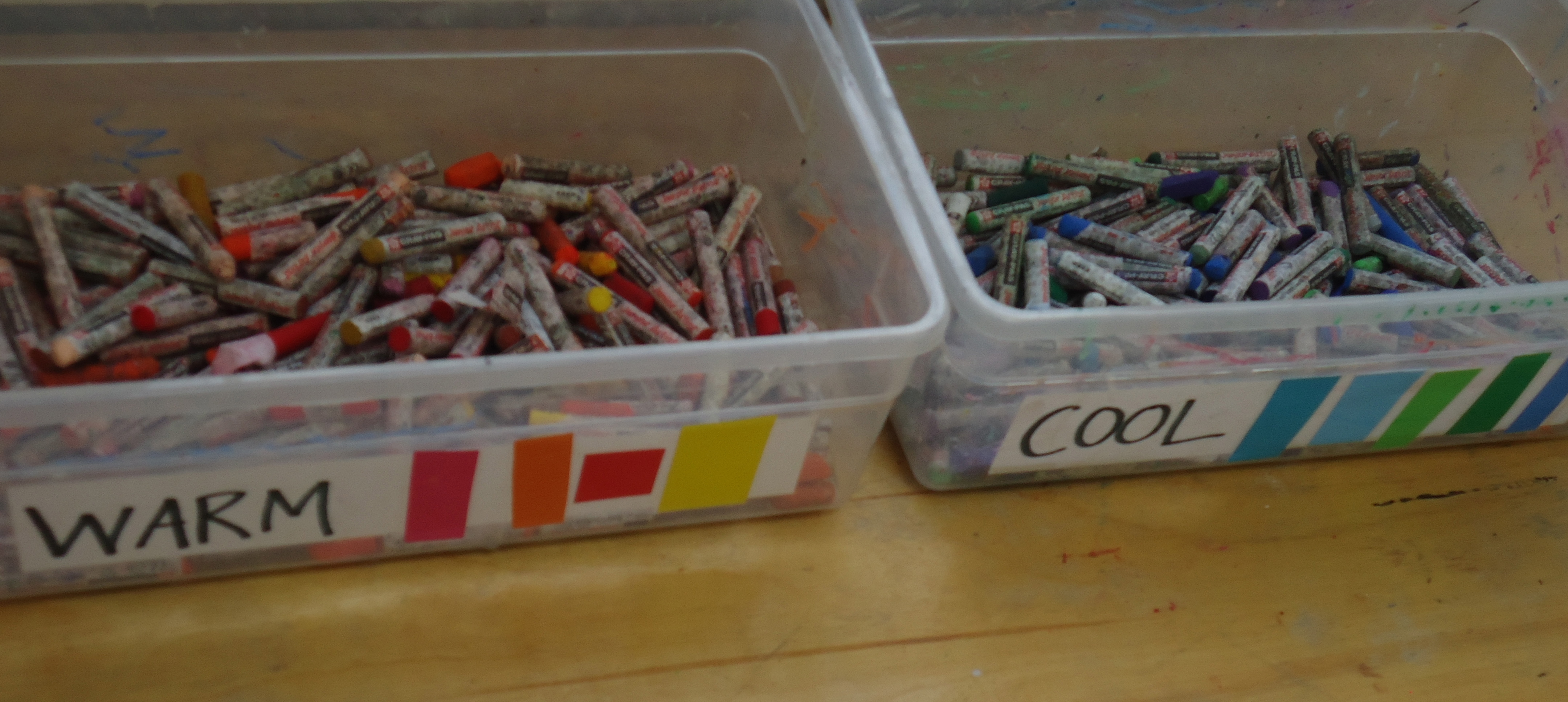
oil pastels organized by temperature

The material display is eye-catching and inspiring. When objects are organized by color, I can’t help but want to TOUCH! Promoting student engagement and a desire to explore is my goal as an art teacher and maintaining a welcoming work environment will help achieve that goal. When a space is cluttered, our minds can easily become cluttered. Children will feel safe and eager to explore in a planned, clean space.

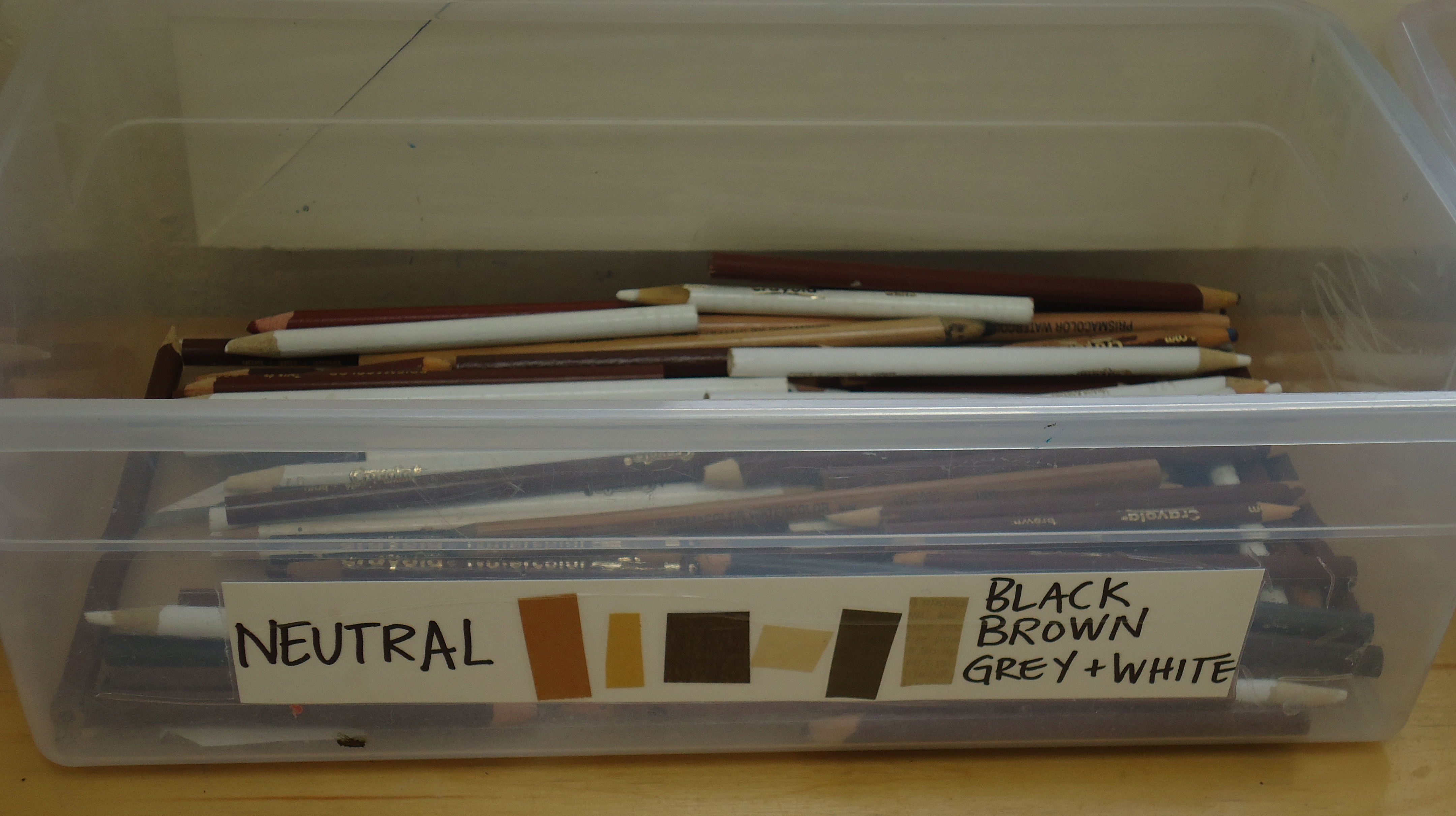
bins labeled by hue and temperature through text and color swatches

Using text and visuals together in a label or message display helps children to make connections between words and images. Every picture tells a story, don’t it?

Do you enjoy organizing? What have been some successful and/or aesthetically pleasing ways you have designed a space?

1 Comment

Filed under Inspiration, Teaching Art to Children

Making Hand Painted Papers @ Art Engine

Ever wonder how art teachers are able to facilitate magic making in the studio? The answer is everywhere at the recently published site, Art Engine. It is an online archive of meaningful art experiences for children. Basically, it is an art teaching collaborative that publishes weekly posts of art lessons and makes it super simple for a teacher or caregiver to search by category, theme or art material. I have shared a quick look into a hand painted paper making activity that was recently featured at Art Engine. The complete art activity with a motivation, lesson developement and material list can be found at Art Engine.

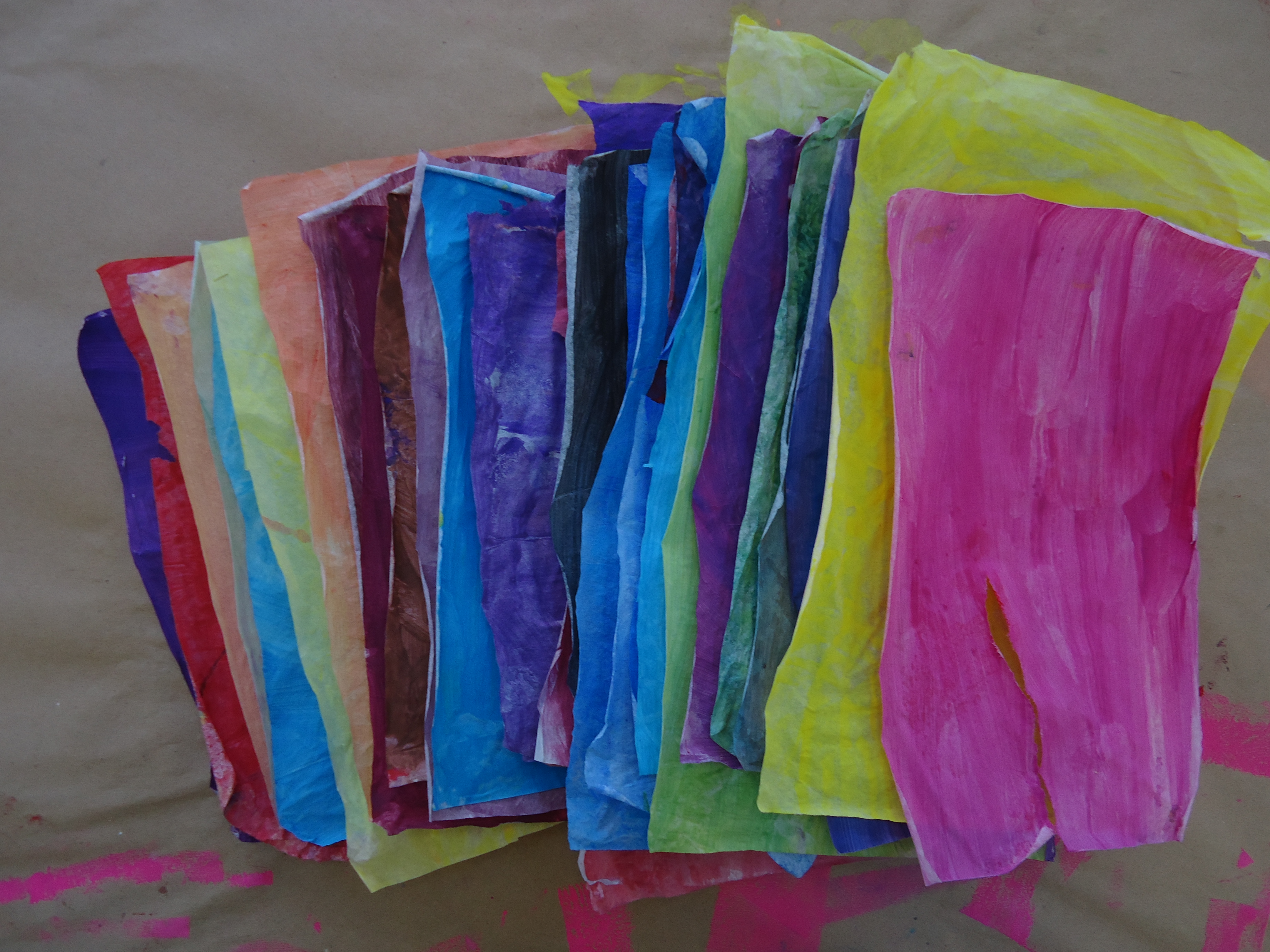
In Hand Painted Papers, Art Engine offers a tutorial on how to make vibrantly colored papers for collage by painting tissue paper. The post shares insight into adding a small amount of white to increase the opacity of the mixture for maximum boldness. Successes for paint set up and process is shared as well as a motivation to begin the lesson and inspire students to think and work like painters. Using tempera paint mixtures of various colors, use a gentle brush to cover the entire sheet of  8×10 inch white tissue paper. Use a new sheet for each new color. After the tissues sheets have dried, add textures with printing tools to the dry solid sheets in new colors that are darker or made lighter with white. You may be fearful that the tissue is too thin and may not hold up to a moving brush, but it rarely tears. The thin, pliable quality of the tissue makes it easy to cut and glue down to the surface. Modge Podge or any adhesive plus gloss/matte medium product works best for collaging hand painted tissue because the paper is so thin. Have students coat the area where they want to glue first then place the tissue over it and paint on top as well. A glossy adhesive like Modge Podge creates a clear stunning finish when applied over the collage. Art Engine suggests having students collage over foamcore stars as well as on paper.

Leave a comment

Filed under Teaching Art to Children